Human Milk and the Neurodevelopment of Infants Born Very Preterm
Early human milk oligosaccharides and the neurocognitive development of a cohort of infants born very preterm: an explorative study
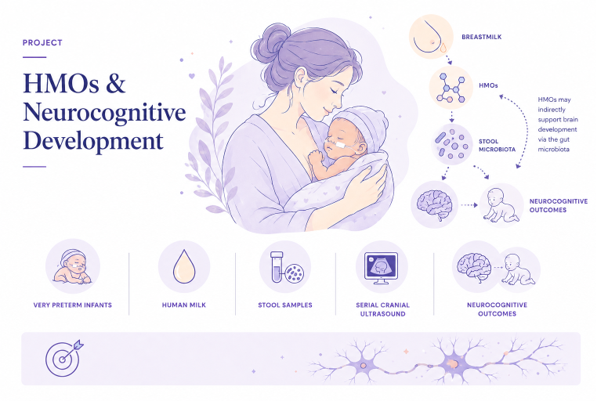
Preterm infants are at increased risk of neurodevelopmental delay. Certain nutrients in breastmilk – Human Milk Oligosaccharides (HMOs) – are associated with improved neurodevelopmental outcomes in full term infants, however, only a very small number of HMOs are thought to enter systemic circulation. Instead, HMOs might selectively promote certain bacterial taxa in the gut, which may in turn support the synthesis of beneficial metabolites such as short-chain fatty acids (SCFAs), which can both cross the blood-brain barrier, and are implicated in a number of key neurodevelopmental processes such as myelination. However, how the timing of HMO exposures effects these associations, and whether similar associations are found in infants born very preterm, remains poorly understood.
This project utilises data from a cohort of very preterm (<32 weeks’ gestation) infants, examining:
- Whether HMO exposures are associated with infant neurodevelopment at two years corrected age,
- Whether earlier time windows of HMO exposure have stronger associations with infant outcomes when compared with exposures later in development,
- Whether HMO exposures are associated with early white-matter production, assessed using serial cranial ultrasound exams, and,
- Whether the timing of exposure impacts these associations.
Kontakt
Dr Isobel Greenhalgh
E-Mail isobel.greenhalgh@usz.ch
Team
Professor Dr med Natalucci
Dr Tilman Reinelt
Dr Isobel Greenhalgh
The study is funded by the International Society for Research in Human Milk and Lactation and the Global Human Milk Research Consortium.